Launch Your B2B Product with More Clarity & Confidence
A new product launch is often a highly anticipated moment for any B2B marketing team — an opportunity to drive pipeline, increase brand visibility and prove your marketing ROI. Yet launches are complex, and it’s not unusual for even strong marketing teams to complete a launch that doesn’t meet expectations.
Why? It’s rarely due to a lack of effort or creativity. It’s common for marketing teams to move quickly into execution, especially when launch timelines are tight. It’s a familiar scenario: a product is nearing readiness, and the immediate reflex is to ask, "What does the ad creative look like?" or "Which channels are we using?"
It’s tempting to start with tactics, especially when pressure is on to get to market quickly. But without a clear strategy, your team can find itself rebuilding the launch process each time, shaping channels, campaigns and content before the product story is fully defined.
Over time, an inconsistent launch process can create hidden costs: extra revision rounds, duplicated effort, budget pressure, inconsistent messaging — internally and externally — and more difficulty connecting your marketing efforts to business impact. How can your team change that?
The answer usually starts with strategy, one that’s structured to help move your launch faster, smarter and with greater confidence.
Strong product launches are built on a solid strategic framework that can then drive measurable business growth. As you build your framework, consider including these three pillars:
Pillar 1: messaging alignment
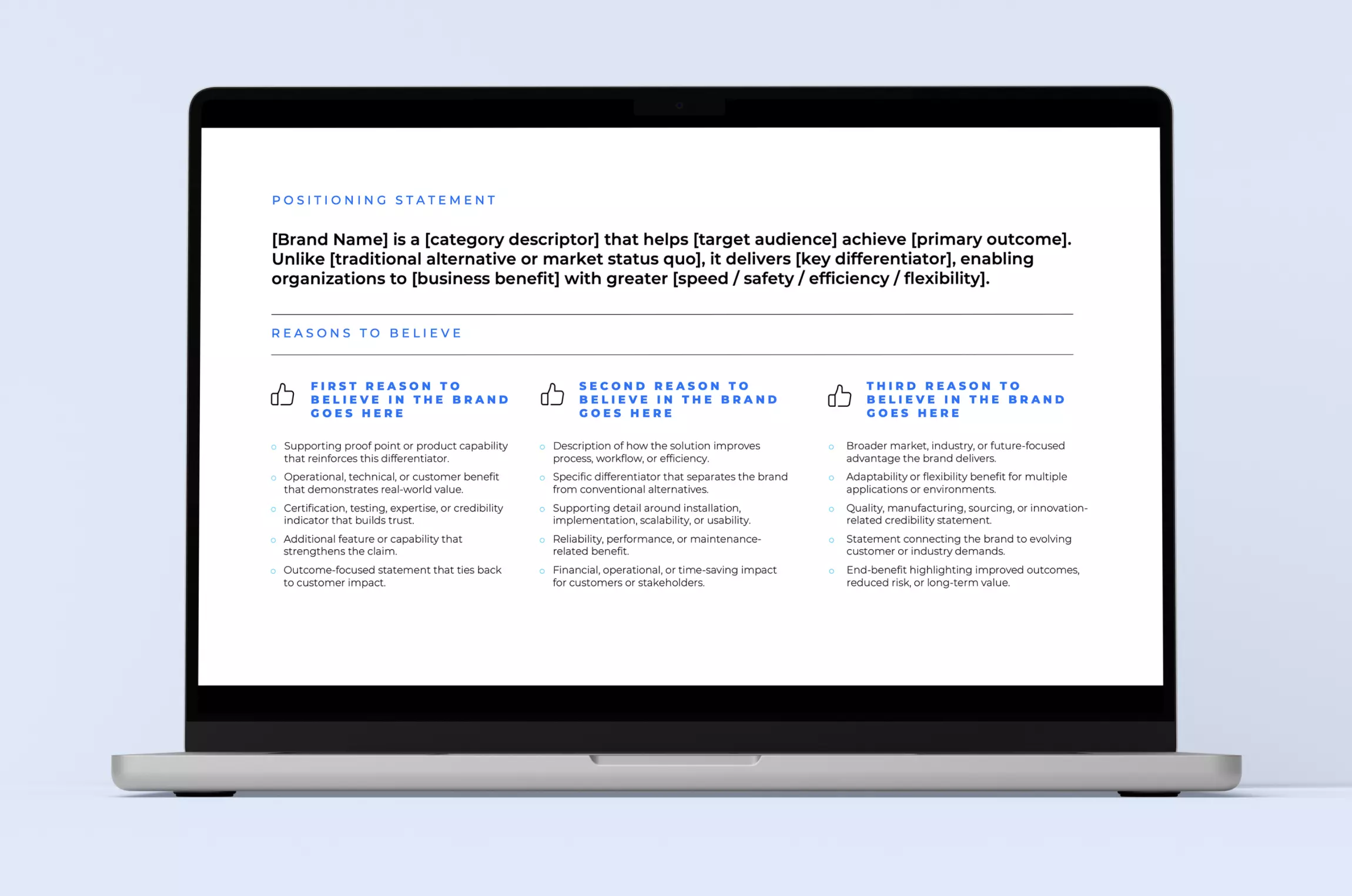
In many successful launches, the messaging framework makes the go-to-market story clear before any execution begins. This framework should define your core value proposition and address the specific pain points you’re solving for your target audience.
When your messaging is aligned and agreed on early, your creative teams, external partners and internal stakeholders can all work from the exact same blueprint. This eliminates message fragmentation and ensures that launch content resonates consistently across every channel and customer touchpoint.
That established messaging becomes your starting point: align on the framework first so every campaign, piece of content and channel decision builds from the same strategic foundation.
Pillar 2: Cross-Functional Integration
Once the message is defined, every team involved in the launch needs to understand its role. Yet in complex launches, this is often where alignment becomes harder to maintain. After working with B2B brands for more than 75 years, we know that misalignment rarely happens because teams are disengaged. More often, each function is moving quickly with its own priorities, timelines and customer needs.
But without alignment, a product launch can fracture. Sales may be brought in too late to shape enablement needs. Support teams could be unprepared for early customer questions. And when departments aren’t aligned around the same message, the market can end up hearing different stories from different parts of the business.
By integrating your teams early, the launch becomes more coordinated, more credible and more effective. Every team — from marketing to product, from sales to public relations — will understand the goals, the messaging, and the role they play in bringing your brand’s solution to market successfully.
One helpful path to create alignment early is to define cross-functional owners, clarify each team’s responsibilities, and build in a shared readiness check before execution begins
Pillar 3: A Sequenced, Linear Rollout
After the message is aligned and your teams are ready, the next step is campaign planning. Strong launch plans often roll out in stages rather than focusing every effort on a single launch moment. That usually means planning the rollout as a progression, with each phase preparing the organization and the market for what comes next. You might start with internal upskilling, move to a soft launch with key partners or beta users and finally execute the broader market release.
By mapping stages, your launch strategy sustains momentum beyond launch day. It gives your team time to strengthen internal readiness, test and refine the rollout and build market interest in a way that creates traction over time rather than relying on a single spike of activity.
Momentum is easier to sustain when the rollout is mapped in advance, with clear criteria for each phase and checkpoints that guide the move from one stage to the next.
Turn Strategy into Repeatable Process
No two launches are identical, but these pillars can form the strategy framework for an actionable playbook — a guide that helps prevent your team from starting every launch from scratch. Instead, it provides a solid foundation to execute with greater consistency and confidence.
As you start building your launch playbook, consider these tips:
- Audit past launches to identify failure points, from messaging confusion to internal misalignment to channels or tactics that didn’t perform as expected.
- Create a scalable structure that defines roles, deliverables and timelines. While some launch specifics may vary, the foundational phases should remain the same.
- Set clear go/no-go checkpoints for messaging and other launch elements to ensure readiness at every stage and avoid missteps that cost time and money.
Build a Repeatable Path to B2B Launch Success
A product launch becomes a stronger growth driver when it is built on strategy rather than reactive tactics. Align the messaging, integrate teams and sequence the rollout with purpose, and your launch process can start to function as a repeatable engine for business growth.
Planning to launch a new product? We’re ready to help you move forward with more clarity and confidence.
Sign Up for our Newsletter - Get agency updates, industry trends and valuable resources delivered directly to you.
Julie LaSalle - Account Director
Julie leads cross-functional teams in developing and executing strategy-driven marketing programs that deliver meaningful business results. With more than a decade in account services at Godfrey, she understands the complexities B2B clients face and works closely with them to align marketing strategy with measurable growth.