

Blog Post
Publish date: October 29, 2026 | Reading time: 13 minutes
Traditional search rankings are no longer the only measure of a brand's online visibility. B2B buyers are increasingly using AI platforms like ChatGPT, Claude and Gemini to research products and evaluate potential partners, often before visiting a company's website. That creates another opportunity for your brand to be discovered, compared with competitors or overlooked entirely.
Understanding how AI search is changing the way customers discover and evaluate businesses is becoming essential to maintaining visibility with the audiences that matter most.
One phrase I recently heard on a webinar perfectly captured this change: "public knowledge is the new homepage." Instead of potential customers forming their first impression from your website, they are increasingly forming opinions through information AI models can source and summarize about your company across the web.
For years, organizations focused on metrics like website traffic or organic rankings to understand digital performance. While those metrics still matter, B2B marketing leaders are now asking another important question: How is my business positioned to show up in this era of AI discovery?
If AI platforms have inaccurate information about your business or can't clearly understand your offering, your company may be overlooked in relevant search conversations where your competitors are already showing up. Even when your brand does appear, the information presented may be incomplete or outdated. This is why evaluating AI search visibility involves more than simply tracking whether your company is mentioned.
What questions are triggering your company to appear? Which sources are influencing how it's described? Is your expertise being recognized in the conversations that matter most to your customers? These are the questions marketers should be asking now.
Strong organic Google rankings remain an important foundation for online visibility, but they don't guarantee your company will appear in AI-generated responses. Unlike traditional search results where users typically click through to websites for more information, AI platforms can answer questions and help buyers compare options without requiring a cited website to visit.
Both traditional and AI-powered search play a critical role in how customers discover, research and evaluate businesses. Understanding your visibility across both channels helps identify where your brand is reaching potential customers, how it's being positioned and where opportunities exist to improve.
B2B buyers were researching solutions independently through organic search long before AI entered the picture. Across industries, organic search consistently delivers qualified traffic and strong business results. What's changing is how quickly they can gather information, compare options and narrow their list of potential vendors. Now, early research suggests that AI-generated referrals may be even more valuable.
A study from Visibility Labs found that visitors referred by ChatGPT converted at a 31% higher rate than non-branded organic search traffic for the ecommerce sites analyzed. While comparable B2B benchmarks are still emerging, the trend is hard to ignore. Users interacting with AI search platforms are often highly motivated and further along in the buying journey. They are comparing solutions and narrowing their shortlist before taking the next step.
Before you open your AI platform of choice and start testing prompts about your business or where you believe your customers start their journey, I challenge you to pause and take a step back to see the bigger picture. Identifying the conversations you want your company to be part of requires thoughtful consideration and positioning.
One of the biggest mistakes companies make when auditing their AI search visibility is testing only their company or product names. While branded searches are a useful starting point, they don't reflect the reality of how most B2B buyers start their research process. Buyers rarely start with a vendor or service provider but rather with a technical challenge or operational need. Your AI search auditing should do the same.
For example, if you’re a manufacturer of commercial HVAC equipment, your industrial-focused prospects are most likely not typing your company name directly into ChatGPT. Instead, they are asking questions like:
These are the conversations where your brand has an opportunity to reach potential customers early in their research, before they've narrowed their options or are ready to engage with sales.
As you complete your AI search audit, identify the priority topics that matter most to your business based on competitor and industry visibility metrics as they stand today. Think beyond products and consider the industries you serve. Topics to track within the AI search ecosystem can include the customer problems you solve, common applications, regulatory requirements, product comparisons and the technical questions your sales team answers every day.
Ultimately, your goal isn't just to determine whether AI recognizes your company; it's to understand whether AI recognizes your expertise.
Once priority topics are identified, the next step of the audit is evaluating how your company appears in the questions buyers are asking throughout the purchasing journey. This entails looking beyond individual keywords as most SEO experts have historically done and digging into how their questions change as they move from understanding the problem to evaluating you as a potential partner.
As buyers move from identifying their challenges to evaluating solutions, their questions become more specific. For example:
Eventually, buyers begin comparing vendors and narrowing their options.
That's when prompts become more direct:
AI platforms love to generate quick, easy-to-scan comparison charts that help buyers cross-compare solutions. Testing prompts across each stage of the buying journey gives you a much clearer picture of your AI visibility than simply asking, "Does ChatGPT know who we are?"
AI platforms attract different audiences, serve different purposes and have their own approach to retrieving and sharing information, just like Google and Microsoft (Bing) have been operating differently for years.
It's important to evaluate your brand across multiple platforms. Testing your brand's visibility across platforms like ChatGPT, Gemini, Claude and Google's AI Overviews can reveal differences in where and how your business appears. While evaluating multiple platforms provides a more complete picture, starting with one or two is a practical way to identify initial gaps and opportunities before expanding your efforts.
As you review each response across platforms, ask yourself:
Don't expect identical results across every platform at any given time. AI-generated answers are probabilistic, meaning the same question can produce different responses, even on the same platform. That's why it's important to look for patterns across multiple buyer questions and topics rather than drawing conclusions from a single response. The goal is to uncover where your brand appears consistently in relevant answers, where competitors are gaining visibility and where improvements are needed.
For each test, record the AI platform, date, exact prompt, which brands appear, how they're positioned, the sources being cited and any inaccuracies you find within a tracking spreadsheet. Save the responses so you can repeat the exercise and compare results over time. Reviewing results across different prompts can help uncover recurring patterns of visibility gaps and opportunities.
Once you've evaluated the questions your buyers are asking and where your brand appears across AI platforms, the next step is understanding what may be influencing those results. Why is a competitor consistently recommended when your company isn't?
The answer may lie in how clearly your content addresses the question, the authority of the sources being retrieved and how consistently your expertise is represented across the web.
As you reflect on what may be influencing your visibility, consider questions like:
The goal isn't to manipulate AI visibility results. It's to strengthen the signals that help AI platforms find and confidently include your company in relevant answers.
At Godfrey, we’ve spent considerable time digging into the inner workings of AI search to uncover how information is retrieved, evaluated and used to shape answers — including why certain brands appear while others are overlooked.
Our 50-page AI Search Visibility Guide for B2B Marketers shares what we’ve uncovered about how AI search works, the role SEO and PR play in influencing brand visibility and practical ways marketers can measure their presence and identify opportunities for improving visibility.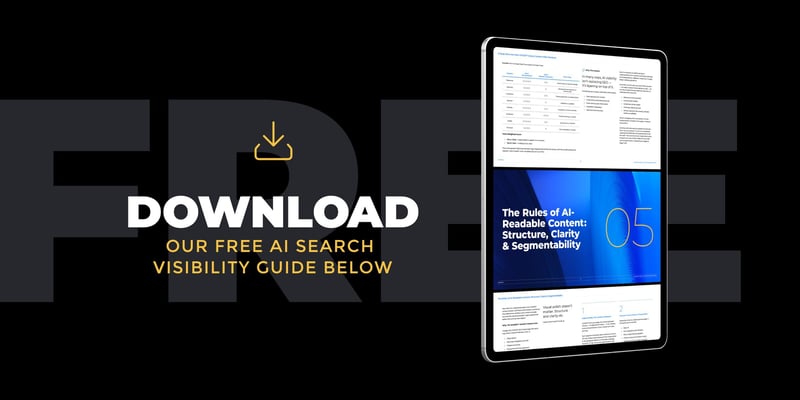
Understanding how your company appears in AI search is just the starting point. Knowing how to use those findings to prioritize improvements to your website structure, content strategy and overall digital presence is where you can have the greatest impact on AI search visibility.
For B2B brands looking to take the next step, Godfrey’s AI Search Visibility Audit helps evaluate how your company appears across AI platforms, where your visibility stacks up against competitors and how your business is being represented in conversations tied to your products and services.
The audit provides a starting point for understanding what's working, where your brand may be missing from relevant conversations and which areas deserve a closer look.
Curious how your business is showing up in AI search?


enews
Sign up for Godfrey enews to get B2B marketing agency insights, industry trends and valuable resources delivered directly to you.


