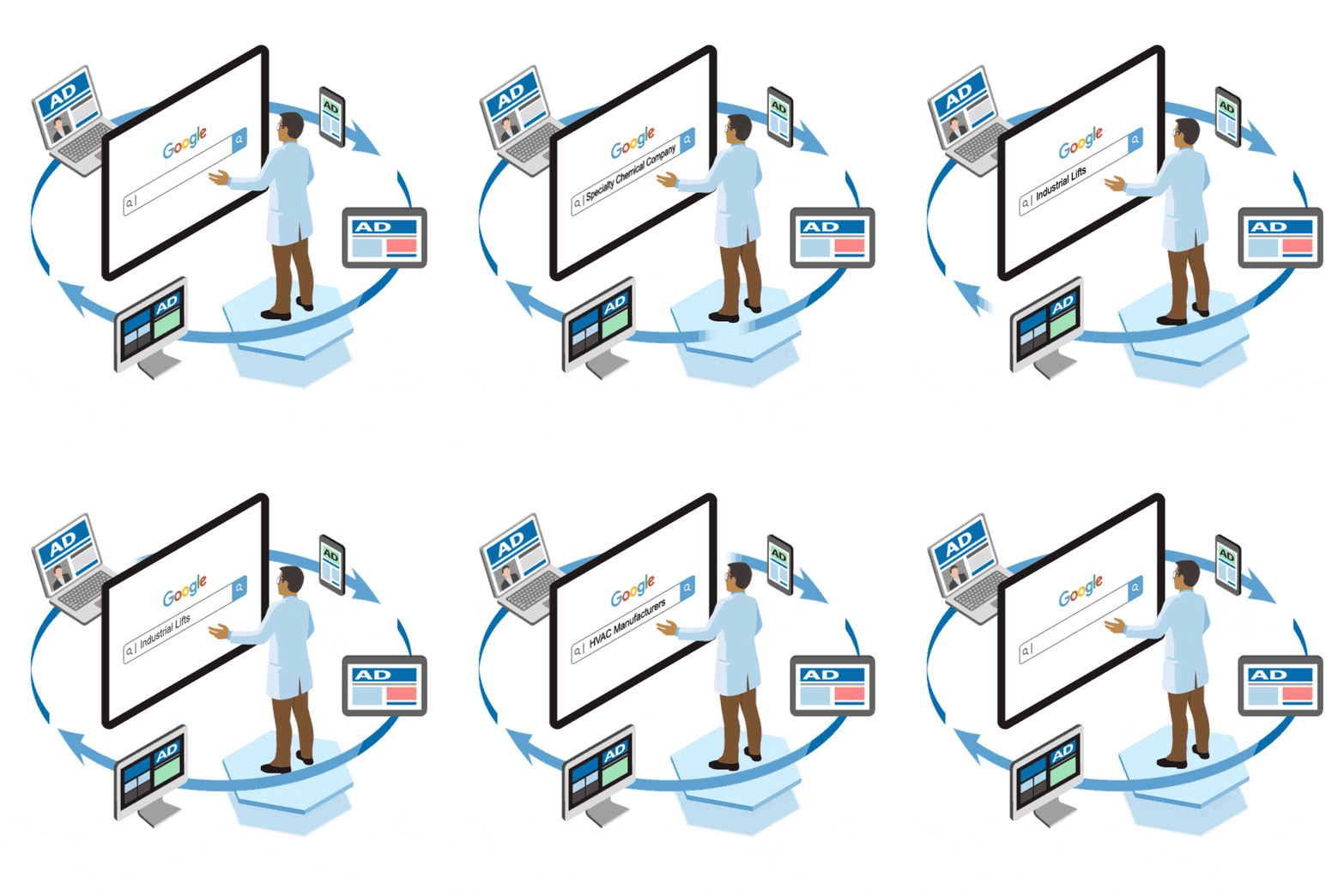
When it comes time for planning media programs, I have the dream that the advertising budget will be large enough to include every single media channel and option that the target audience is using. The reality is, this does not happen. With the murky economic outlook we are currently facing, advertising budgets are tighter than ever. Working with a reduced budget is challenging. Start by thinking about a few simple media related questions like:
Who is my audience?
Where can I find them?
Once I find them, what do I want them to do?
When you answer those questions, you can create an effective media program. In fact, small budgets often force us to think outside of the box in order find new ways of reaching the audience.
Options available for reaching your audience are ever evolving. ---More---
Facing limited budgets, and audiences with even more limited attention spans, more marketers are turning to social media. While sites like Facebook and MySpace are obvious choices for reaching young consumers, b2b marketers have been slower to embrace---or see the proven value in---social networking sites for reaching business-to-business audiences. Purely social sites might not be right, but community sites that provide valuable content are a viable vehicle for reaching btob targets--if approached with discipline.
The prospect of adding social media to your marketing mix may seem daunting. For some companies, it’s difficult to accept the loss of control, relinquishing the ability to manage how information is disseminated. But the control is already gone. In the blogsphere, in forums and communities, your business users are already talking. It’s just a matter of whether or not you want to listen and talk back.
Understanding how your audience seeks information at various parts of the buying process is a key factor in determining the right media channels to utilize. While it is not easy or practical to assume everyone in your target market has the exact same motivations and behaviors, there are usually some strong similarities. The Pew Internet & American Life Project has an interesting online quiz, where after ten questions regarding the information technology you use, they can determine what typology group you fall under. http://www.pewinternet.org/quiz/quiz.asp
I took the quiz, and as it turns out, I was classified as a “Connector.” While I don’t agree 100% with the classification, for the most part it was right. Connectors tend to utilize their cell phones and all of its options quite frequently; they go online to connect with people and manage digital content. ---More---
According to a study reported in the online edition of B-to-B magazine, display ads on the web have a positive impact on search activity, improving clicks for organic and paid search by 155% on average, depending on the industry.
The study by Specific Media, an online media distribution company, analyzed comScore Ad Effectiveness data over a 12-month period. While the study was largely consumer-focused, there’s no reason to believe the results would be different for b-to-b or industrial marketing.
And while not conclusive, it gives credence to the theory that online display advertising has a branding impact.
In our experience, search, both organic and paid, routinely enjoys significantly better performance than other online media, as measured by click-through rate, time on site, pages viewed, bounce rate, ---More---
Much has been noted recently about the now-official recession we’re in, and its effect on the Web 2.0 technologies. There is precedent for that, of course. Dot-com mania turned into a dot-com depression in the early part of this decade, as the sober realities of a post-9/11 world brought “irrational exuberance” down to earth.
Unfortunately, a few good companies and concepts took the fall with the pets.com of the Internet world. Fortunately, though, most companies saw the value of the Internet and the promise of interactive communications in general. And, after a brief lull, more rational enthusiasm returned.
We can expect much the same thing in this recession. However, it’s a little different this time around in that the various elements of the media offering haven’t departed from reality to the extent that was common then.
Search, for instance, is here to stay, or at least as long as there’s an Internet. ---More---
If creativity is the pursuit of ideas, then strategic creativity is predatory. It's the hunt for a powerful solution that can drive your whole marketing program. But strategic creative doesn't exist in any of the usual places. And it can't be recycled from last year's campaign. It's new thinking. It's fresh, grown from a single thought.
Most creative ideas are like newborn crocodiles. They are precocious at first but only 2% of them live long enough to grow big teeth. That's because truly original ideas sound strange at first. They are usually squashed as soon as they hatch. If no one has rolled their eyes at you lately then you've probably been keeping your creative ideas to yourself.
New thinking is critical but it isn't enough. Strategic creative must be aligned with your brand positioning. It should embody your brand.
Pre-qualify early ideas by asking yourself three questions:
You hear all the time about the tricks some companies employ to gain higher Google rankings: link farms, white text, and so on. But it’s clear that the bright folks at Google are working overtime those who are trying to beat the system.
Some people thus criticize Google for the influence (some might say, “control”) the Googleplex exercises over what happens on the Internet.
I, on the other hand, believe they have made a major contribution in one very important regard. Because of their unswerving dedication to the accuracy and success of a user’s search, they have forced marketers to pay attention to content.
They’ve made search engine optimization a very simple proposition: content is the one “trick” that will always work. And, because it can stay on your site forever (or at least until it’s overtaken by new developments), content is the gift that keeps on giving. ---More---
Earlier this year I posted a commentary about branding in uncertain times. I started the post by writing, “It looks like we are in for some uncertain economic times”. At the time there was some doubt. Today, there is no doubt about it; we are in very uncertain times.
Personally, I am trying not to get sucked too deep into the doom and gloom. I am trying to live in the spirit of the Chinese proverb – “May you live in interesting times”. I am trying to get my head around the idea that these uncertain times are interesting times and the perfect opportunity to rethink what needs to get done and how we have done it before, and how we might do it today.
Uncertain times are not new. There have been survivors of previous uncertain times. Those survivors adopted an attitude that acknowledged that sales don’t completely go away and that the market will rebound. ---More---
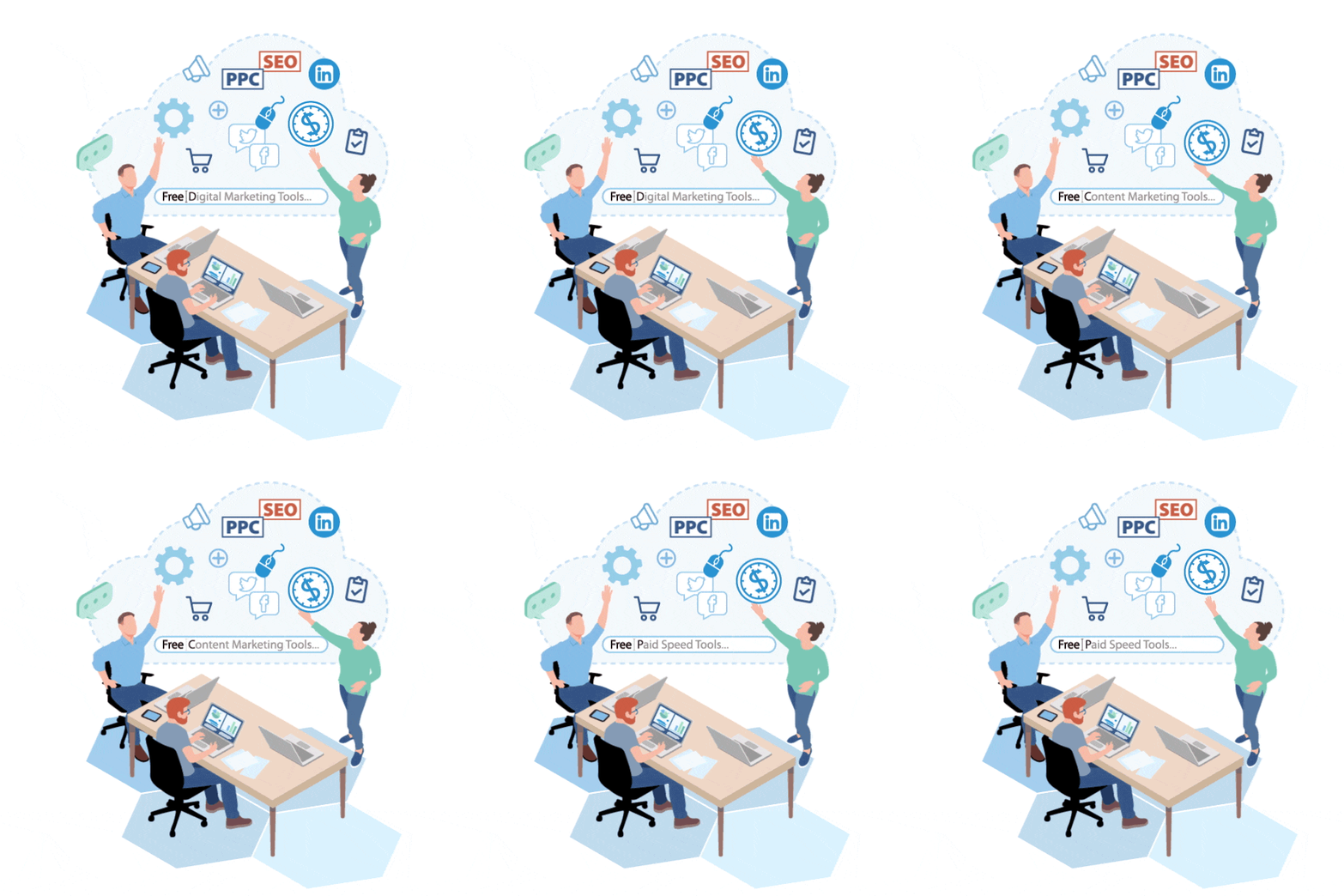
You have to cut back your marketing budget. There’s no easy answer on what to keep and what to sacrifice. But by investing more time—not more money—online marketing can still be an effective part of your btob marcom program. Even in uncertain times.
Focus on content. This is the first, and persistent, item on my list. You must commit to producing fresh and valuable content. Better content means a better site, search rankings, and user experience—which support better conversions. If you aren’t willing to commit to producing content then there’s no point in reading on.
I'm a big fan of Mad Men, the television drama series on AMC that depicts the advertising business in the 1960s. I've seen every episode. In fact, I even have my favorites saved on the home DVR. Therefore, it should likely come as no surprise that I'm including it as the introduction to my latest post.
Mass communications was the name of the game fifty years ago. ---More---