July 30, 2008 | 9:41am
 It’s generally true that the more keywords you put on your site, the better it does in organic search. But not always. In fact, many business-to-business sites suffer from keyword confusion to the point of keyword cannibalization. When search engines spider your site, they are looking for more than just a jumble of words. They are looking for logic and consistency about how those words are used. Say, for instance, that your main product, widgets, is used as a keyword throughout your site. That’s a good thing. But what if the titles, descriptions, keywords and page content for several different pages all use widgets? And links, inside and outside your site, point to different pages? The simple answer is that the search engines get confused. And the result is keyword cannibalization, with your pages actually competing against each other for search ranking. ---More---


|
May 2, 2008 | 11:45am
 In a web 2.0 world, it is becoming a continuous struggle to stay on top of SEO best practices. Staying at the basics, companies need to understand that SEO is moving more to quality as opposed to quantity.
In the past many companies got on the SEO bandwagon by focusing primarily on Meta data. Between meta tags and meta keywords, companies spent more time and effort on the meta information than on the web content itself.
Businesses need to understand that the SEO landscape is constantly evolving. No longer are web spiders just looking at meta data. They’re looking at more important information about a site to determine how high it should rank. Here are some basics for business to business marketers.
Consider focusing your meta descriptions and keywords around solutions and not just hardware. Traditionally, customers are looking to solve problems, not just to look at equipment. ---More---
|
April 29, 2008 | 12:06pm
 To start, the key to a successful search engine marketing (SEM) campaign, just like any advertising campaign, is determining the goal of the program, and defining the specific products and/or services that will be promoted. Focusing on keywords and phases often leads to a long list of keywords that you then try to mold into a campaign.
Another important step is determining the content of your landing pages. Do you already have landing pages that support what will be promoted? If not they need to be developed, and designed so that visitors feel compelled to break anonymity. This is where the visitor moves from a nameless "page view" to a prospect. Also, having landing pages that are relevant to your keywords and your ad will help increase your ranking (and enhance your visitor's experience). ---More---
|
April 2, 2008 | 10:39am
Integrated Machine (Lynne Marie DeMers-Hunt)
 Integrating your marketing 2.0 efforts cannot be overlooked nowadays. Search, social media components, email and direct mail all need to work together to help the customer along the buying process. Each element in itself does some pretty heavy lifting, but combining them to work in conjunction, you develop an assembly line of integration. For example, some B2B companies are not only sending targeted emails to potential customers, but including blog elements into their campaigns. A simple combining of technologies not only allows them to reach and listen to their audience, but helps build a community – a community who likes to talk to each other. They have been able to reach an audience they did not directly target and find out more than they originally expected. When you add a search element into the mix, you drive even more traffic to the community. Following up your efforts with the correct analysis and constant realignment will have your ---More---
|
February 4, 2008 | 11:16am
When should B to B marketers start thinking about mobile technologies?
The answer is now. Think about it. There are nearly 200 million subscribers in the U.S., which is about 65% of the population. And thanks to advancements like PDA’s, smart phones, Blackberrys and most recently the iPhone, cellular technology is narrowing the gap between phones and PCs. In fact, with more stringent security for air travelers, many executives have set aside their laptops in favor of their favorite web-enabled hand-held device.
So how should B2B marketers take advantage of this newest medium? There’s no one perfect answer. The best thing to do is start understanding and implementing the basics.
Text messaging was one of the first and most elementary forays into mobile marketing. We’ve all seen text messaging promotions using short codes on popular TV shows like "American Idol" or ---More---
|
January 29, 2008 | 9:29am
While Search Engine Optimization (SEO) is a good investment, it won’t make a significant difference in your site’s performance if you don’t follow some basic principles.
Rule number one is about knowing the right words. A good SEO partner will have the tools to evaluate the right keywords that your audience is using to search for you. Just because you think your audience will search for you using a particular keyword or phrase, doesn’t mean that they will. Proper research will go a long way towards reaching your full audience.
Rule number two is all about content. Just putting in keywords will only get you so far. If you don’t implement a process for continuously updating your site’s content, then your audience won’t return to your site, and neither will the search spiders that visit your site to determine your search rankings.
Rule number three is giving your audience what they are looking for. ---More---
|
January 17, 2008 | 8:51am
 In the lead article in the December 10 issue of B2B magazine, Kate Maddox outlined “the top 10 marketing trends for 2008, based on interviews with marketers, ad agencies, media executives, analysts and other industry experts.” Read article.
The top 10 are green marketing, globalization, the shift to online, customer in control, embracing web 2.0, improving operations, targeted and personal events, integrating media platforms, going mobile and blended search.
The marketers interviewed include top tier marketers such as Boeing, Caterpillar, FedEx, GE, Hewlett-Packard, IBM, Intel, Microsoft, Oracle, Siemens and UPS. But what about the rest of us? (Okay, we’re an agency but we came from and still serve primarily non-top-tier B-to-B marketers. You know – the real world.)
We think the top 10 list is on target. ---More---
|
August 31, 2007 | 3:44pm
Twice last week I heard about B-to-B marketing directors who were "ordered" to achieve the #1 ranking in Google search results for one or more keywords that were important to their company. That was the goal. Period. In one case, the company shelled out $75,000 over three months before they realized that they weren't getting significant results in terms of leads.
“Gotta be #1” might be a perfectly good move under the right circumstances, but absent strategy the mentality is reminiscent of the rush into e-commerce in the 1990s and that's a cautionary tale. If this approach catches on we’ll find ourselves in an auction situation and prices will soar. Hopefully that won’t happen, but until the search phenomenon matures a little, you might find yourself facing a similar dictate. You have to be responsive but, other than throwing money at it, what can you do?
First, if your management is stuck on buying their way into first place, you can ask if ---More---
|
August 24, 2007 | 11:23am
 Your Web site IS your company. It is a critical customer touch point. Before you allocate your budget to techniques to drive traffic to your site, make sure it’s the site you want visitors to experience. What does your Web site say about what it’s like to do business with you? Your marketing materials say you’re experts and provide great customer service---does your Web site pay this off? For first-time visitors discovering your company through a Google search or an ad link, what will their first impression of your company be?
Ask yourself these questions:
Is the organization and structure of your site intuitive to people outside your company, or does it just align with your business organization?
Do you have the information people expect and need presented in a web-friendly format, or is your site just an online brochure with a bunch of PDFs?
Can visitors find what they need quickly? Do you have useful tools to help with ---More---
|
August 24, 2007 | 11:22am
Click Fraud (Melinda Bauer)
Click Fraud …
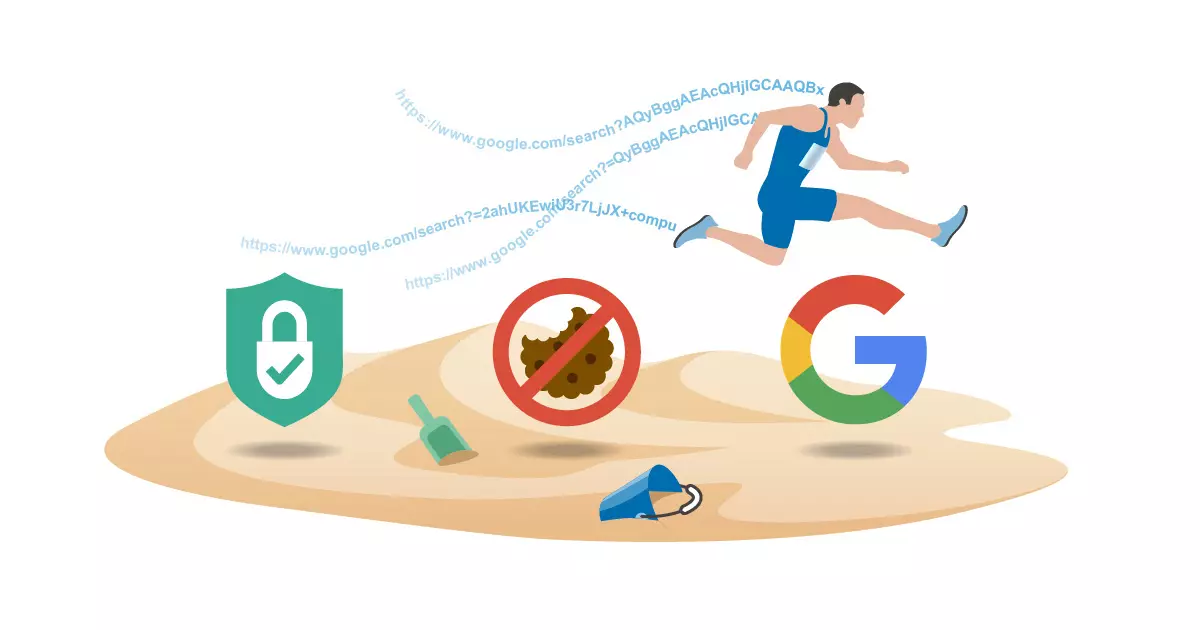
Search is a great way to connect with buyers when they are actively in the market for a product or service, but click fraud is causing SEM professional to take a second look. Being aware of click fraud is the first step in protecting your campaign. So here are my top 5 ways to fight click fraud.
- Monitor your campaigns. Keep a close eye on what a normal traffic pattern is. If one day you notice that the content portion of the AdWords campaign is producing at 25% click through rate (CTR) when your average is .5% you’ll know something may be wrong.
- Negative Keywords! Negative keywords are just as important as the keyword list. This is one
---More---
|