I'm a big fan of Mad Men, the television drama series on AMC that depicts the advertising business in the 1960s. I've seen every episode. In fact, I even have my favorites saved on the home DVR. Therefore, it should likely come as no surprise that I'm including it as the introduction to my latest post.
Mass communications was the name of the game fifty years ago. Hit them hard, hit them often, instruct their actions and sure enough, customers would listen to anyone. Quite frankly, they couldn't help themselves otherwise. But in today's era of intense media fragmentation, where youwere named Time Magazine's Person of the Year in 2006, nothing could be further from the truth. Want to engage your customers? Connect with them as they wish to be reached. Embrace new technologies. After all, it's their world now. You're just living in it.


For these reasons, I could not disagree more with a recent article by Christopher Hosford at B2B Magazine, who contends that uncertain economic times may lead to the abandonment of experimental marketing tactics for more traditional measures. To be clear, the term "experimental" is well-defined - "viral videos, mobile marketing, social media, rich media, and even gaming and virtual worlds." However, what the author fails to communicate is that the very tactics he describes are, for the most part, more economical and more measurable relative to other traditional means such as trade advertising. They are also clearly on the rise as supported by empirical data.
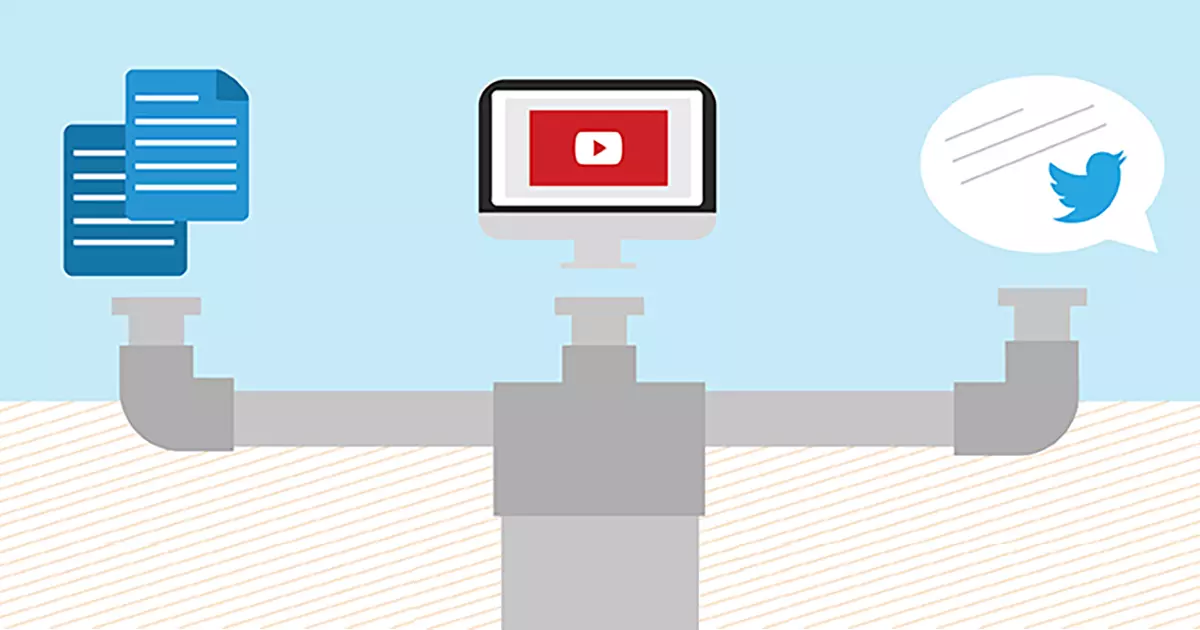
Consider the use of videos, for example. Peter Burris, a Principal Analyst at Forrester Research, indicated at a recent ISBM conference that 39% of B2B marketers (n=189) currently use video marketing as a social marketing tactic while 10% of them are testing the waters (Q1 2008 report). Perhaps that's because nearly half of business executive audiences watch broadband videos as a means of receiving information according to an April 2008 Ipsos study.
Social media, or as the author implies, social networks (e.g. LinkedIn, Facebook, etc.) are also getting more attention. They tied with blogs for the largestpiloting rate (17%) of any social media tactic when asked of B2B marketers. Interestingly enough, B2B marketers also perceive this highly cost-efficient tactic as one that is especially measurable for creating brand awareness (25%).
Rich media, on the other hand, which includes widgets, video banners, animated GIFs and Flash advertisements, is just exploding with growth. The article notes that "Nielsen Online reported in September that spending on rich media advertising increased 60% in the first half of 2008 from the year-earlier period." Forrester Research confirms that 60% of B2B marketers use rich media today in their social marketing communications, with an additional 10% piloting the tactic. What's more, 25% of B2B marketers perceive this tactic as one that is highly measurable for lead generation. Research proposed by GlobalSpec for the industrial and manufacturing sectors (Q2 2008) also validates the data, with high levels of usage and planned adoption as well.
The use of digital communications will continue to rise relative to traditional means, especially in times of uncertain economic conditions. B2B marketers favor these tactics for their economics and their means of accountability. B2B customers favor these tactics for their ability to be highly personalized and highly relevant to them. Therefore, it is up to us as marketing professionals to give our customers what they want, when they want and how they want it. Despite the changing times from years past, I think Don Draper would even agree with that.
We reserve the right to remove any comments which are
obscene, offensive or otherwise deemed inappropriate for this site. Please see
our Guidelines for more information.