March 9, 2010 | 11:54am
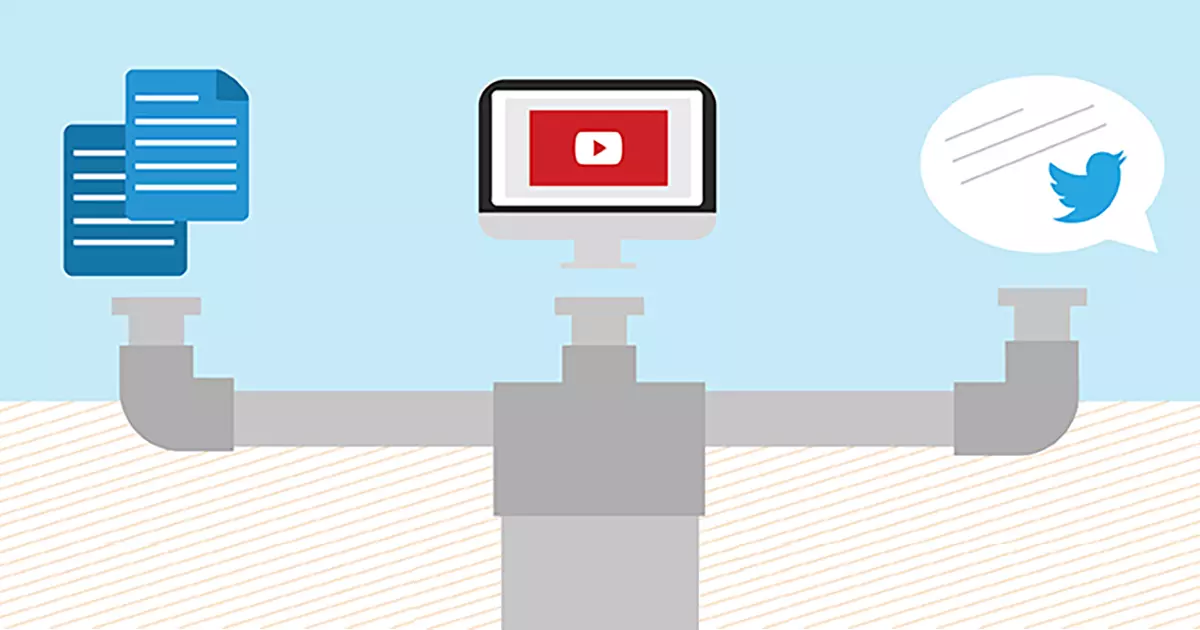
 “Don't say the old lady screamed—bring her on and let her scream.” In his advice on storytelling, Mark Twain’s timeless wit and wisdom holds true in the discussion of online video. Thanks to advances in Internet technology and increased bandwidth over the last few years, online video has emerged as the fastest growing media platform with an estimated 72% of Web users watching online video clips. In the next three years, Web video consumption is projected to double. The message to marketers? Visitors expect a rich experience when they come to your site. As one of the most powerful tools in the marketer’s arsenal, online video offers a wealth of opportunity for rich storytelling, differentiation, brand building and traffic-generation.



The resurgence of video in storytelling In the 90’s, corporate capabilities videos were commonplace, but distribution was limited to VHS and DVD. ---More---
|
March 31, 2009 | 10:29am
Keep tabs on your competition’s creative with this easy checklist
Quickly: Describe five of your competitor’s advertising campaigns and how they differentiate themselves in your industry. How do their advertising efforts match up to yours? If you’re spending more than a couple minutes thinking about this, then you’re not alone.
Given the fast-paced environments we work in, it’s all too easy to focus on short-term, easier to accomplish tasks, which prevents you from achieving larger objectives. Long-term goals, such as overcoming a host of competitors in order to position your company as an industry leader, require an ongoing cycle of industry observation, self-evaluation and refinement of your marketing materials. While this may seem common sense, too often we become so concentrated on our own marketing efforts that it’s easy to skip the most crucial aspect of this process—observation of the ---More---
|
June 25, 2008 | 9:39am
 In every B-to-B web site redesign project, the home page always gets a lot of attention. Not only does everyone have an opinion, every area of the company usually feels that they need to be included in the process. Often a committee is created, usually with some acronym as a name to inspire action or teamwork. (WACS, WAT, WEBA) And then, the battle begins. Company divisions start clamoring for heavy exposure on the home page. Upper management wants a lengthy Flash intro splash screen. (No, this isn’t dead yet, and yes, it’s still a bad idea. See note below.) The IR team insists its messages should trump marketing’s. There are months of meetings, rounds of designs, and the end product reflects the company’s internal strife. The final design is often a clunky compromise, a concession to meet the political needs of the company—not the needs of the customer. Oh, well. They won’t ever see your home page anyway. ---More---
|
May 16, 2008 | 10:52am
 The economy is creeping towards a recession. The DOE’s 13 SEER mandate has helped level the playing field, household buying habits have changed dramatically since the popularity of the internet, and media options have drastically fragmented. With all of this going on, how can a low to mid level HVAC contractor compete against the big guys? While there is no perfect answer to this question, there are some suggestions to help you spend your precious marketing dollars wisely.
Start by looking to your manufacturer and distributor advertising programs. There are literally thousands of dollars available to dealers who agree to use branded and sometimes pre-packaged advertising programs. In fact some manufacturers offer up to 4 times a dealer’s advertising investment!
Next, think about timing and placement of your advertising. What are you really getting out of your investment? Case in point: if you put all of your dollars into yellow pages advertising then you ---More---
|
May 8, 2008 | 8:40am
More sophisticated sites offer product comparisons and tools that enable customers to better choose their own solutions. But even something as simple as a brochure, offered as a free downloadable pdf, can go a long way towards deepening the relationship between you and potential customers.
As you provide customers with tools and information, remember to instill a level of confidence. Customer testimonials are helpful, but only if they are genuine and presented well.
Validation from outside sources, like trade organizations and government agencies, also goes a long way toward instilling confidence in your company. Consider including their logos on your Web site where visitors will see them. ---More---
|
May 2, 2008 | 11:45am
In a web 2.0 world, it is becoming a continuous struggle to stay on top of SEO best practices. Staying at the basics, companies need to understand that SEO is moving more to quality as opposed to quantity.
In the past many companies got on the SEO bandwagon by focusing primarily on Meta data. Between meta tags and meta keywords, companies spent more time and effort on the meta information than on the web content itself.
Businesses need to understand that the SEO landscape is constantly evolving. No longer are web spiders just looking at meta data. They’re looking at more important information about a site to determine how high it should rank. Here are some basics for business to business marketers.
Consider focusing your meta descriptions and keywords around solutions and not just hardware. Traditionally, customers are looking to solve problems, not just to look at equipment. ---More---
|
March 3, 2008 | 8:57am
Once you get customers to your site, make sure it’s a site you’re proud of. Keep it clean and uncluttered. First impressions are important and provide opportunities to immediately engage visitors with information that meets their needs. Begin by providing a brief description of who you are, including the products and services that you offer, along with language that relates to the visitors need or problem. Don’t give people a reason to leave your site too early. Addressing their “pain issues” up front rather then burying them deeper in your site will encourage visitors to stay longer. Avoid industry speak, and keep your history and mission statement off the home page, reserving this valuable real estate to tell visitors how you can help them. Make the site easy to navigate and the source of relevant content that is short, simple and to the point. ---More---
|
February 20, 2008 | 11:09am
 For the past year, Godfrey has been educating and counseling clients about the “new wave” in public relations – Convergent PR. If you’re not familiar with the term, here’s a brief definition: It’s a blending, or convergence, of traditional PR tactics (e.g., press releases, press kits and trade show support) with new social media PR techniques (e.g., blogs, podcasts, videocasts and social media press releases).
Some of our clients jumped on the Convergent PR bandwagon right away. (We’re thrilled.) Others are still trying to understand how Convergent PR works and how it can complement their “hyperintegrated” marketing communications programs. (In this respect, we see ourselves as educators and advisors.)
Of course, Godfrey isn’t the only entity that sees a convergence of traditional (print) media and social (online) media. ---More---
|
February 18, 2008 | 3:29pm
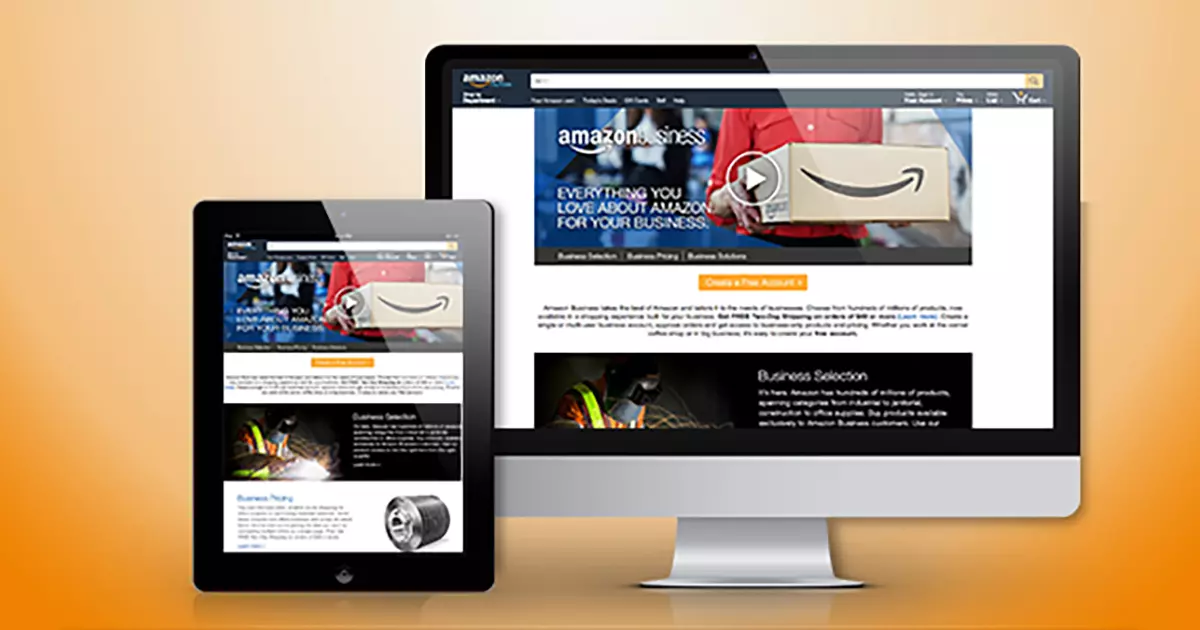
In the Internet age, consumers like to comparison shop. Help them make better decisions with a robust Web site.
Today, when most people want information, they go to the Web – to educate themselves, to look for solutions or to compare companies and products. Often they may be ready to buy, based on the information they find. That’s why it’s so important to design a Web site that includes all the information customers need at any stage in the buying process.
Your Web site is your electronic storefront and as such, it should accomplish three things. First, it should be easy to locate. You can invest thousands of dollars on the best Web site in the world, but if you don’t drive traffic to it, the site won’t do you much good.
Second, your Web site should position your ---More---
|
February 4, 2008 | 11:16am
When should B to B marketers start thinking about mobile technologies?
The answer is now. Think about it. There are nearly 200 million subscribers in the U.S., which is about 65% of the population. And thanks to advancements like PDA’s, smart phones, Blackberrys and most recently the iPhone, cellular technology is narrowing the gap between phones and PCs. In fact, with more stringent security for air travelers, many executives have set aside their laptops in favor of their favorite web-enabled hand-held device.
So how should B2B marketers take advantage of this newest medium? There’s no one perfect answer. The best thing to do is start understanding and implementing the basics.
Text messaging was one of the first and most elementary forays into mobile marketing. We’ve all seen text messaging promotions using short codes on popular TV shows like "American Idol" or ---More---
|