March 9, 2010 | 11:54am
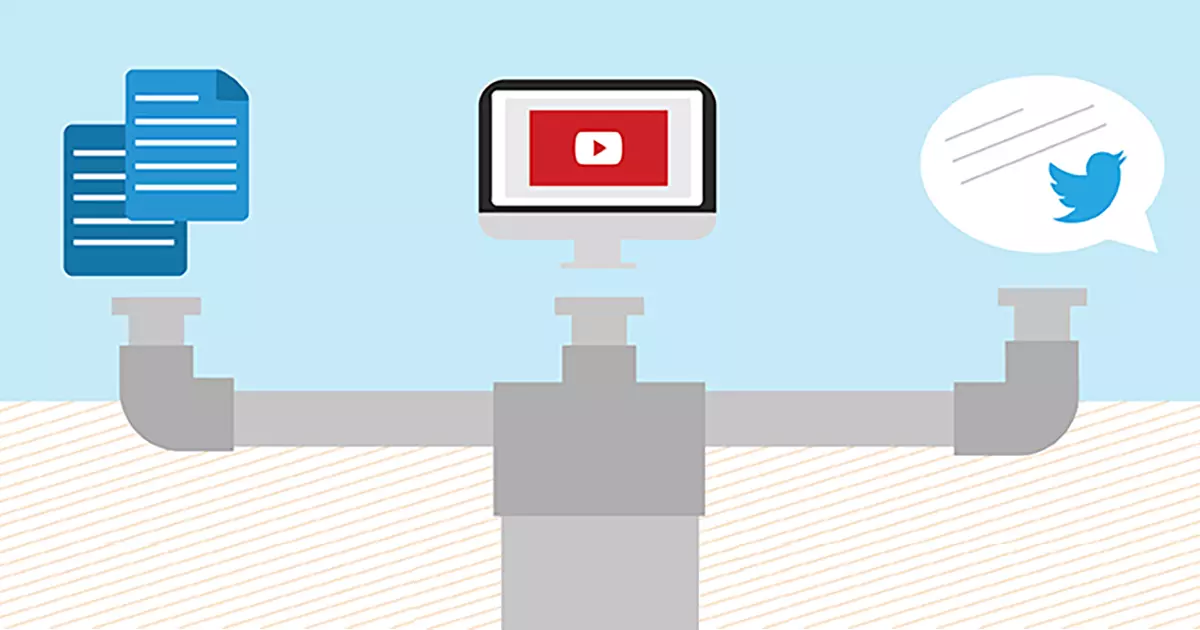
 “Don't say the old lady screamed—bring her on and let her scream.” In his advice on storytelling, Mark Twain’s timeless wit and wisdom holds true in the discussion of online video. Thanks to advances in Internet technology and increased bandwidth over the last few years, online video has emerged as the fastest growing media platform with an estimated 72% of Web users watching online video clips. In the next three years, Web video consumption is projected to double. The message to marketers? Visitors expect a rich experience when they come to your site. As one of the most powerful tools in the marketer’s arsenal, online video offers a wealth of opportunity for rich storytelling, differentiation, brand building and traffic-generation.



The resurgence of video in storytelling In the 90’s, corporate capabilities videos were commonplace, but distribution was limited to VHS and DVD. ---More---
|
December 10, 2009 | 4:52pm
 In my last two installments on Creating and Maintaining a B2B Blog, I offered suggestions on who should write your company blog, how often you should post and how to develop a content strategy for your blog.
In this third installment of my blogging series, I’d like to make some suggestions on how to promote your blog.
If you are going to invest the time, resources and discipline to create a blog you’ll want to be sure it’s getting read. It is not as simple as, “Build it and they will come.” You’ll need to promote your blog, let people know it exists. Consider all the tactics you can use to announce and then promote your blog including email, your website, search and other blogs. You’ll need to be proactive. Think about active and passive forms of promotion. Here are a few suggestions.
1. Start with your company website. Make sure there is a link to your blog somewhere on your site, or multiple pages if relevant. ---More---
|
November 4, 2009 | 11:06am
 One of the key tenants of strategy is choice. As we recover from this ugly recession, management in virtually every B2B company, large, medium and small faces BIG choices, like how they should position their company for future marketing success. Make no mistake, the consequences of these choices are BIG. They will have a much larger impact than next quarter's sales results.
What will guide decision making for such big choices? Relying on input from the sales force? Good, but not good enough all by itself for getting a true understanding of the market and audience information needed. Secondary Research? Probably some good information can be gleaned, but the information may be too general and, perhaps, not timely. Research done through publications is limiting and often lacks actionable information and insight.
Management needs solid, timely empirical information to guide informed decision making based on the reality of today's ---More---
|
August 24, 2009 | 4:36pm
As social media continues to make inroads into the B2B universe, more companies are including blogs as a communications tactic. According to the Society for New Communications Research, 16 percent of Fortune 500 companies support a corporate blog while Forrester Research reports the number is closer to 29 percent. Both reports are one to two years old so I suspect the numbers are much higher today.
As acceptance of blogging continues to grow I thought it might be helpful to give some advice on how to create and maintain a company blog. This is the first of several blogs, each focusing on a specific topic.
Let’s start at the beginning. You’ve decided to create a blog but are faced with two important questions: 1. Who should write the blog? 2. How often should you post?
Some companies are fortunate and have an “industry expert” on staff, someone with broad industry ---More---
|
July 21, 2009 | 10:22am
When a B2B marketer is asked about measuring brand equity, they usually have a pretty good idea about what folks are trying to glean or understand. But, if you dig a little and start asking what makes up this thing we call "brand equity" you might start to get a few puzzled looks. Dig even deeper and ask how they are leveraging what they know about their B2B brand equity that will have meaningful strategic impact on their marketing decisions in 2010 and you might see a little color drain from their face.
Is your company stuck in the old paradigm of brand equity measurement that offers little more than awareness and perception? Are you ready (and is your management) to develop a deeper more meaningful understanding about brand equity measurement that can be used for more effective 2010 planning?
Research that extends beyond knowledge, but through the use of advanced analytics, modeling and simulation, provides valuable real-time insights on how to build better ---More---
|
March 31, 2009 | 10:29am
Keep tabs on your competition’s creative with this easy checklist
Quickly: Describe five of your competitor’s advertising campaigns and how they differentiate themselves in your industry. How do their advertising efforts match up to yours? If you’re spending more than a couple minutes thinking about this, then you’re not alone.
Given the fast-paced environments we work in, it’s all too easy to focus on short-term, easier to accomplish tasks, which prevents you from achieving larger objectives. Long-term goals, such as overcoming a host of competitors in order to position your company as an industry leader, require an ongoing cycle of industry observation, self-evaluation and refinement of your marketing materials. While this may seem common sense, too often we become so concentrated on our own marketing efforts that it’s easy to skip the most crucial aspect of this process—observation of the ---More---
|
November 25, 2008 | 11:08am
 If creativity is the pursuit of ideas, then strategic creativity is predatory. It's the hunt for a powerful solution that can drive your whole marketing program. But strategic creative doesn't exist in any of the usual places. And it can't be recycled from last year's campaign. It's new thinking. It's fresh, grown from a single thought.
Most creative ideas are like newborn crocodiles. They are precocious at first but only 2% of them live long enough to grow big teeth. That's because truly original ideas sound strange at first. They are usually squashed as soon as they hatch. If no one has rolled their eyes at you lately then you've probably been keeping your creative ideas to yourself.
New thinking is critical but it isn't enough. Strategic creative must be aligned with your brand positioning. It should embody your brand.
Pre-qualify early ideas by asking yourself three questions:
1. Is it unique?
2. Is it memorable?
3. ---More---
|
November 3, 2008 | 2:48pm
You can’t go anywhere or strike up a conversation with anyone without the topic turning to the economy. Invariably the question I ask or is asked of me is, “How’s business?”
We’ve been through this before and weathered the storm. So have our clients. Typically, the knee-jerk reaction is to cut budgets, reallocate funds and tighten the marketing and advertising belt. We have a white paper titled, “Why Branding Becomes More Important In Uncertain Times” written by Ken Jones. You can download this white paper here.
Marketers who decide to continue to invest in their marketing programs during tough economic times, albeit possibly at a smaller allocation, need to be more prudent how and where they spend their money. That’s obvious.
So how is business? You’ve still got a communications budget, probably smaller than originally planned. ---More---
|
September 17, 2008 | 4:34pm
Every company has brand stories that are unique. Like “the moral to the story” after a tale we heard as children, your brand story works to get to the heart of your company. It breathes life into who you are and what you stand for. These stories have the power to unite companies in a common purpose and direction. And they can help you build a deeper connection with customers. Brand stories are cumulative and strategic; they build on each other and help define what differentiates your company and why someone should consider buying from you. Brand stories are far more than cute or clever anecdotes, they can be key business drivers. The more coherent and compelling your brand story, the more it will power the success of your company. B-to-B marketers in this new broadband world have an opportunity to tell bigger and better stories than ever. This is new territory but the potential for enhancing your brand is enormous. ---More---
|
June 25, 2008 | 11:50am
 There is no doubt that your brand is your most valuable asset. Brands build loyalty. But, if your employees can’t deliver that brand promise at each and every touch point with your customers, then your brand will begin losing value—quickly. Getting your employees on board before you role out your brand to the marketplace is essential. Although it is essential, many marketers often skip the crucial step of internal branding. Selling your brand to your employees should come way before you try to sell your brand to your customers and/or prospects. If your employees don’t believe in what you are selling or don’t understand it, then it is likely all you will deliver to your customers are empty promises. Your first step, after you’ve determined what your brand positioning and messaging should be, is to infuse the brand personality into all aspects of the company. Support from upper management is key. ---More---
|