You have to cut back your marketing budget. There’s no easy answer on what to keep and what to sacrifice. But by investing more time—not more money—online marketing can still be an effective part of your btob marcom program. Even in uncertain times.
Focus on content. This is the first, and persistent, item on my list. You must commit to producing fresh and valuable content. Better content means a better site, search rankings, and user experience—which support better conversions. If you aren’t willing to commit to producing content then there’s no point in reading on.
I'm a big fan of Mad Men, the television drama series on AMC that depicts the advertising business in the 1960s. I've seen every episode. In fact, I even have my favorites saved on the home DVR. Therefore, it should likely come as no surprise that I'm including it as the introduction to my latest post.
Mass communications was the name of the game fifty years ago. ---More---

The economy is creeping towards a recession. The DOE’s 13 SEER mandate has helped level the playing field, household buying habits have changed dramatically since the popularity of the internet, and media options have drastically fragmented. With all of this going on, how can a low to mid level HVAC contractor compete against the big guys? While there is no perfect answer to this question, there are some suggestions to help you spend your precious marketing dollars wisely.


Start by looking to your manufacturer and distributor advertising programs. There are literally thousands of dollars available to dealers who agree to use branded and sometimes pre-packaged advertising programs. In fact some manufacturers offer up to 4 times a dealer’s advertising investment!
Next, think about timing and placement of your advertising. What are you really getting out of your investment? Case in point: if you put all of your dollars into yellow pages advertising then you ---More---
More sophisticated sites offer product comparisons and tools that enable customers to better choose their own solutions. But even something as simple as a brochure, offered as a free downloadable pdf, can go a long way towards deepening the relationship between you and potential customers.
As you provide customers with tools and information, remember to instill a level of confidence. Customer testimonials are helpful, but only if they are genuine and presented well.
Validation from outside sources, like trade organizations and government agencies, also goes a long way toward instilling confidence in your company. Consider including their logos on your Web site where visitors will see them. ---More---
In a web 2.0 world, it is becoming a continuous struggle to stay on top of SEO best practices. Staying at the basics, companies need to understand that SEO is moving more to quality as opposed to quantity.
In the past many companies got on the SEO bandwagon by focusing primarily on Meta data. Between meta tags and meta keywords, companies spent more time and effort on the meta information than on the web content itself.
Businesses need to understand that the SEO landscape is constantly evolving. No longer are web spiders just looking at meta data. They’re looking at more important information about a site to determine how high it should rank. Here are some basics for business to business marketers.
Consider focusing your meta descriptions and keywords around solutions and not just hardware. Traditionally, customers are looking to solve problems, not just to look at equipment. ---More---
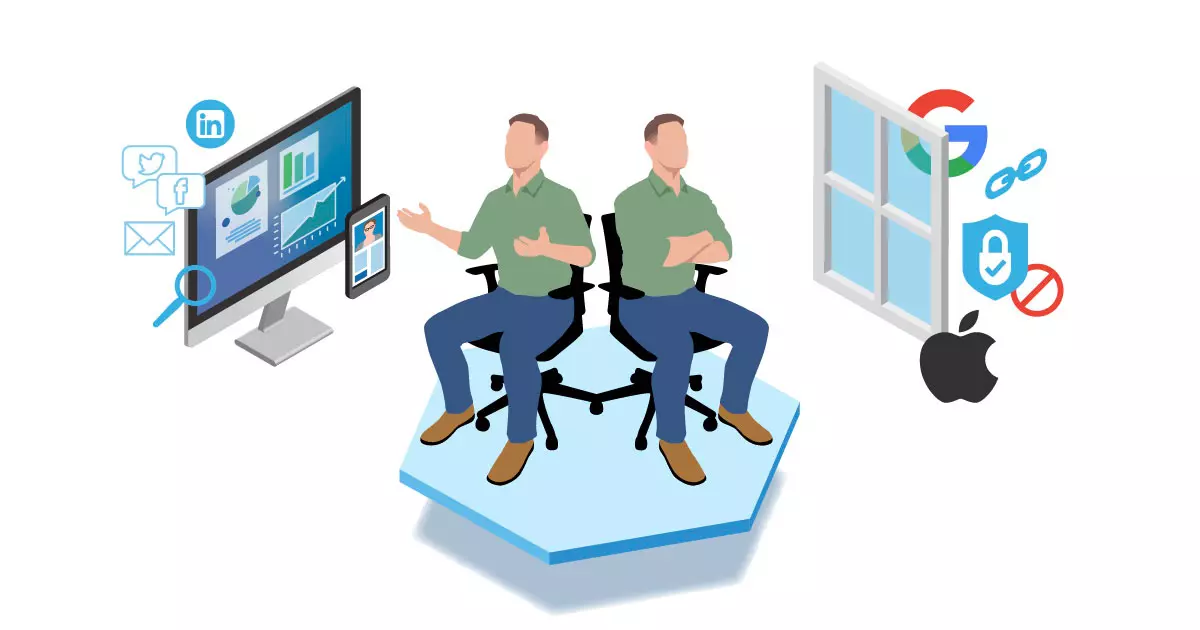
Integrating your marketing 2.0 efforts cannot be overlooked nowadays. Search, social media components, email and direct mail all need to work together to help the customer along the buying process. Each element in itself does some pretty heavy lifting, but combining them to work in conjunction, you develop an assembly line of integration.
For example, some B2B companies are not only sending targeted emails to potential customers, but including blog elements into their campaigns. A simple combining of technologies not only allows them to reach and listen to their audience, but helps build a community – a community who likes to talk to each other. They have been able to reach an audience they did not directly target and find out more than they originally expected. When you add a search element into the mix, you drive even more traffic to the community.
Following up your efforts with the correct analysis and constant realignment will have your ---More---
Ah, the widget. Beloved gadget, little module, info snippet, capsule of content or frivolous fun brought right to me. The widget is nothing new, but it’s been hyped a lot lately as marketers salivate over the advertising potential.
A long-time user of widgets, mostly for aggregating syndicated content, I was recently annoyed when I noticed a change in my iGoogle desktop. My only eye-candy widget, a picture of the day, was no longer visible, pushed off screen by a Google ad, newly inserted above the day’s image. Instantly engaged by the compelling advertisement, I delayed conquering my overflowing E-mail inbox and immediately clicked through to the advertiser's web site. Or so those wide-eyed over widgets want to believe.
Once you get customers to your site, make sure it’s a site you’re proud of. Keep it clean and uncluttered. First impressions are important and provide opportunities to immediately engage visitors with information that meets their needs.
Begin by providing a brief description of who you are, including the products and services that you offer, along with language that relates to the visitors need or problem. Don’t give people a reason to leave your site too early. Addressing their “pain issues” up front rather then burying them deeper in your site will encourage visitors to stay longer. Avoid industry speak, and keep your history and mission statement off the home page, reserving this valuable real estate to tell visitors how you can help them. Make the site easy to navigate and the source of relevant content that is short, simple and to the point. ---More---
For the past year, Godfrey has been educating and counseling clients about the “new wave” in public relations – Convergent PR.If you’re not familiar with the term, here’s a brief definition: It’s a blending, or convergence, of traditional PR tactics (e.g., press releases, press kits and trade show support) with new social media PR techniques (e.g., blogs, podcasts, videocasts and social media press releases).
Some of our clients jumped on the Convergent PR bandwagon right away.(We’re thrilled.)Others are still trying to understand how Convergent PR works and how it can complement their “hyperintegrated” marketing communications programs.(In this respect, we see ourselves as educators and advisors.)
Of course, Godfrey isn’t the only entity that sees a convergence of traditional (print) media and social (online) media. ---More---
In the Internet age, consumers like to comparison shop. Help them make better decisions with a robust Web site.
Today, when most people want information, they go to the Web – to educate themselves, to look for solutions or to compare companies and products. Often they may be ready to buy, based on the information they find. That’s why it’s so important to design a Web site that includes all the information customers need at any stage in the buying process.
Your Web site is your electronic storefront and as such, it should accomplish three things. First, it should be easy to locate. You can invest thousands of dollars on the best Web site in the world, but if you don’t drive traffic to it, the site won’t do you much good.
Second, your Web site should position your ---More---