January 19, 2010 | 11:21am

Being connected to customer needs and desires should be a key aspect of shaping your B2B brand. But the engine of growth needs to include creativity, something many B2B executives don't spend much time on. Others like Google stake their reputation on creativity. They walk the talk: All engineers are allotted up to 20 percent of their time to work on their own ideas. The result? Products like Gmail and Google News, seeds of which began as personal endeavors.


According to MIT Media Lab, a hotbed of creativity, the secret sauce for business creativity is developing an environment where different people from different areas and disciplines of an enterprise, work together to share ideas to innovate.
Dr. ---More---
|
November 4, 2009 | 11:06am
One of the key tenants of strategy is choice. As we recover from this ugly recession, management in virtually every B2B company, large, medium and small faces BIG choices, like how they should position their company for future marketing success. Make no mistake, the consequences of these choices are BIG. They will have a much larger impact than next quarter's sales results.
What will guide decision making for such big choices? Relying on input from the sales force? Good, but not good enough all by itself for getting a true understanding of the market and audience information needed. Secondary Research? Probably some good information can be gleaned, but the information may be too general and, perhaps, not timely. Research done through publications is limiting and often lacks actionable information and insight.
Management needs solid, timely empirical information to guide informed decision making based on the reality of today's ---More---
|
September 29, 2009 | 11:56am
 In my last blog on Creating and Maintaining a B2B Blog I offered some suggestions on who should write your company blog and how often you should post. In this installment, I’d like to follow up a bit more on the frequency of posting and give some direction on what you should be posting. The question we are often asked is, “How often should I add new content or post on my company blog?” The simple answer is: When you have something relevant to say. When you post and what you post is related. Let’s assume you’ve identified an internal “expert” or core team of employees with the responsibility of managing to your company blog. You now need to determine the frequency of posting and create a realistic schedule. Let’s start at the top. 1. Think Strategically a. Does your company have a marketing and communications strategy? What you ---More---
|
March 9, 2009 | 1:17pm
 What can you say about the state of B-to-B PR right now? That it's holding its own in the midst of severe marketing budget cuts? That its value is shining through because it is so cost effective? That it's leveraging social media and social networks in innovative ways that many B-to-B marketers wouldn't have imagined 12 - maybe even 6 - months ago?
I think I would say all of those things, but they are all so obvious, right? There's another level where PR plays that's always important but is absolutely critical in times of crisis, and for many B-to-B companies the current global economic situation is a true crisis.
At its best, PR can help frame issues and articulate policy for senior management. It can then be the engine of communication to all stakeholders. At its best, PR can be the tip of the spear, leading the charge as companies manage through this recession and simultaneously begin to plan for the turnaround.
PR can be the level head and calm ---More---
|
November 25, 2008 | 11:08am
 If creativity is the pursuit of ideas, then strategic creativity is predatory. It's the hunt for a powerful solution that can drive your whole marketing program. But strategic creative doesn't exist in any of the usual places. And it can't be recycled from last year's campaign. It's new thinking. It's fresh, grown from a single thought.
Most creative ideas are like newborn crocodiles. They are precocious at first but only 2% of them live long enough to grow big teeth. That's because truly original ideas sound strange at first. They are usually squashed as soon as they hatch. If no one has rolled their eyes at you lately then you've probably been keeping your creative ideas to yourself.
New thinking is critical but it isn't enough. Strategic creative must be aligned with your brand positioning. It should embody your brand.
Pre-qualify early ideas by asking yourself three questions:
1. Is it unique?
2. Is it memorable?
3. ---More---
|
June 27, 2008 | 9:48pm
 Inspiration can come from anywhere, and the spark of an idea can come from anyone. Not long ago, I was part of a team that needed to come up with a positioning ad campaign for one of our clients. Our account manager reviewed the situation with our creative team. Towards the end of his review, I remember him saying, "OK, and here are a few of my stupid thoughts and ideas...." Then he continued to rattle-off several things. One of his so-called "stupid ideas" really stuck in my head. So much so, I spent hours one weekend working on taking that idea—and several others—to the next level, showing how they could work in a series. During our next team meeting, the creative folks and I presented the ideas, and then built upon those ideas, making them stronger and stronger. There is nothing I find worse than a so-so idea that looks good. ---More---
|
June 25, 2008 | 11:50am
 There is no doubt that your brand is your most valuable asset. Brands build loyalty. But, if your employees can’t deliver that brand promise at each and every touch point with your customers, then your brand will begin losing value—quickly. Getting your employees on board before you role out your brand to the marketplace is essential. Although it is essential, many marketers often skip the crucial step of internal branding. Selling your brand to your employees should come way before you try to sell your brand to your customers and/or prospects. If your employees don’t believe in what you are selling or don’t understand it, then it is likely all you will deliver to your customers are empty promises. Your first step, after you’ve determined what your brand positioning and messaging should be, is to infuse the brand personality into all aspects of the company. Support from upper management is key. ---More---
|
June 25, 2008 | 11:45am
I’ve never been a “GE glorifier”, but I have been paying a little more attention to GE lately, as a student of business. Specifically, the strategic leadership of CEO Jeffrey Immelt. In my opinion, he's finally stepped out of the giant shadow of his predecessor and mentor, Jack Welch. Since December 2002, Immelt has sold off more than $75 billion in GE businesses such as its plastics and insurance units, and most recently, appliances (a business once synonymous with its brand name) while spending more than $50 billion on acquisitions in faster-growing sectors including wind power and aviation. Strategy in action.
Mr. Immelt has a very good sense of what he wants the GE brand to stand for going forward - innovation in emerging businesses in the 21st century (for now, that means big investments in health-care and energy.) Much of the growth in GE’s strategy will come ---More---
|
January 25, 2008 | 1:47pm
 In a recent article published by The Economic Times, Nirmalya Kumar encourages B-to-B companies to embrace a new culture of communications when selling to prospective customers – the 3Vs – “valued customer, value proposition and value network.” While seen as a complement to the 4Ps that comprise the typical marketing mix (product, pricing, promotion and placement), the 3V-approach is more strategic in nature. Therefore, it is more likely to engage the CEO at a strategic level during a time when many CMOs are struggling to stay relevant and remain on the payroll (the average tenure of a CMO is 26.8 months according to BtoB Magazine). Realizing this philosophy of customer value management ---More---
|
December 28, 2007 | 10:49am
 When was the last time you saw a company advertise itself as “combative and adversarial?” Have you seen any vision statements that say “We struggle with our customers for common ground?” How about a tagline that says, “Committed to losing your trust?”
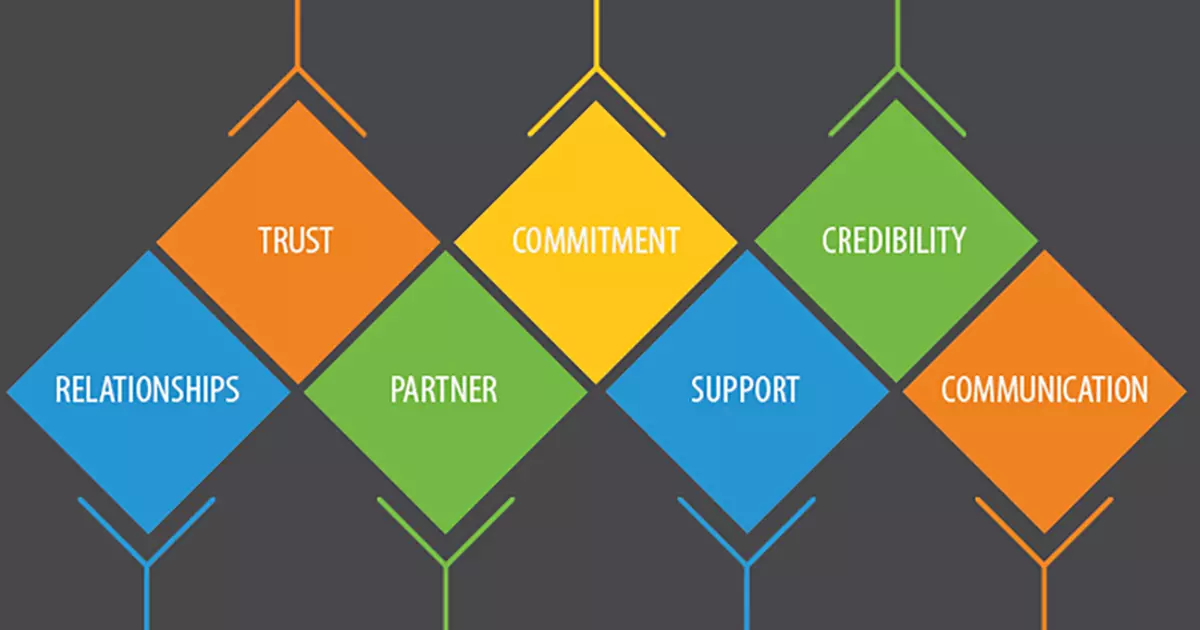
Of course not. But more than half of b-to-b technology companies are branding themselves this way by their actions, according to a new study by the Chief Marketing Officer Council, reported in a recent online article in B2B Magazine.
According to the study, which surveyed 1,000 b-to-b technology buyers, IT marketing and customer relationship executives and their channel partners, 56% of vendors perceive themselves as being customer-centric, but only 12% of customers agree. Even more telling is that more than half of customers surveyed described their relationship with ---More---
|