August 15, 2008 | 4:42pm
Selling Higher (Lance Baird)
 “A sales professional should always try to find the decision-makers in the organization. The decision-makers have the least knowledge of the situation and are therefore more likely to believe whatever the salesperson says.”

-- Scott Adams, The Dilbert Principle
Have you ever submitted such a well-groomed proposal and/or delivered such a smashing presentation that you were sure your customer would move forward? A few days go by... no big deal. A week goes by... maybe they’re traveling. A few weeks go by... maybe they’re on vacation. A month goes by... they’ve selected somebody else. Where did you go wrong? One concept that has always helped me throughout my career is the notion of selling higher – selling your proposition to those higher in the organizational food ---More---

|
May 16, 2008 | 10:52am
 The economy is creeping towards a recession. The DOE’s 13 SEER mandate has helped level the playing field, household buying habits have changed dramatically since the popularity of the internet, and media options have drastically fragmented. With all of this going on, how can a low to mid level HVAC contractor compete against the big guys? While there is no perfect answer to this question, there are some suggestions to help you spend your precious marketing dollars wisely.
Start by looking to your manufacturer and distributor advertising programs. There are literally thousands of dollars available to dealers who agree to use branded and sometimes pre-packaged advertising programs. In fact some manufacturers offer up to 4 times a dealer’s advertising investment!
Next, think about timing and placement of your advertising. What are you really getting out of your investment? Case in point: if you put all of your dollars into yellow pages advertising then you ---More---
|
May 8, 2008 | 8:40am
More sophisticated sites offer product comparisons and tools that enable customers to better choose their own solutions. But even something as simple as a brochure, offered as a free downloadable pdf, can go a long way towards deepening the relationship between you and potential customers.
As you provide customers with tools and information, remember to instill a level of confidence. Customer testimonials are helpful, but only if they are genuine and presented well.
Validation from outside sources, like trade organizations and government agencies, also goes a long way toward instilling confidence in your company. Consider including their logos on your Web site where visitors will see them. ---More---
|
March 18, 2008 | 9:38am
 I’m back in the creative seat again. I volunteered to step in and head our creative staff after we agreed Jim Everhart, my predecessor, should spearhead our hyperintegration efforts. I’m looking at things from a slightly different perspective now – a perspective of someone with a lead “creative” title and responsibilities. As I remove my account manager hat, something strikes me. We creative folks have more tools at our disposal – blogs, podcasts, email marketing, and the list goes on. Our primary function has always been to think of new and unique ways to tell our client’s story, demonstrate a benefit and craft compelling ways to reach out to a marketer’s various constituents – engineers, channel partners, integrators, other influencers and ultimately, end-users. Sure, we still need to apply our traditional creative skills, but we now have these new, exciting tools at our disposal. ---More---
|
March 3, 2008 | 8:57am
Once you get customers to your site, make sure it’s a site you’re proud of. Keep it clean and uncluttered. First impressions are important and provide opportunities to immediately engage visitors with information that meets their needs. Begin by providing a brief description of who you are, including the products and services that you offer, along with language that relates to the visitors need or problem. Don’t give people a reason to leave your site too early. Addressing their “pain issues” up front rather then burying them deeper in your site will encourage visitors to stay longer. Avoid industry speak, and keep your history and mission statement off the home page, reserving this valuable real estate to tell visitors how you can help them. Make the site easy to navigate and the source of relevant content that is short, simple and to the point. ---More---
|
February 18, 2008 | 3:29pm
In the Internet age, consumers like to comparison shop. Help them make better decisions with a robust Web site.
Today, when most people want information, they go to the Web – to educate themselves, to look for solutions or to compare companies and products. Often they may be ready to buy, based on the information they find. That’s why it’s so important to design a Web site that includes all the information customers need at any stage in the buying process.
Your Web site is your electronic storefront and as such, it should accomplish three things. First, it should be easy to locate. You can invest thousands of dollars on the best Web site in the world, but if you don’t drive traffic to it, the site won’t do you much good.
Second, your Web site should position your ---More---
|
February 4, 2008 | 11:16am
When should B to B marketers start thinking about mobile technologies?
The answer is now. Think about it. There are nearly 200 million subscribers in the U.S., which is about 65% of the population. And thanks to advancements like PDA’s, smart phones, Blackberrys and most recently the iPhone, cellular technology is narrowing the gap between phones and PCs. In fact, with more stringent security for air travelers, many executives have set aside their laptops in favor of their favorite web-enabled hand-held device.
So how should B2B marketers take advantage of this newest medium? There’s no one perfect answer. The best thing to do is start understanding and implementing the basics.
Text messaging was one of the first and most elementary forays into mobile marketing. We’ve all seen text messaging promotions using short codes on popular TV shows like "American Idol" or ---More---
|
January 25, 2008 | 1:47pm
In a recent article published by The Economic Times, Nirmalya Kumar encourages B-to-B companies to embrace a new culture of communications when selling to prospective customers – the 3Vs – “valued customer, value proposition and value network.” While seen as a complement to the 4Ps that comprise the typical marketing mix (product, pricing, promotion and placement), the 3V-approach is more strategic in nature. Therefore, it is more likely to engage the CEO at a strategic level during a time when many CMOs are struggling to stay relevant and remain on the payroll (the average tenure of a CMO is 26.8 months according to BtoB Magazine). Realizing this philosophy of customer value management ---More---
|
December 28, 2007 | 10:49am
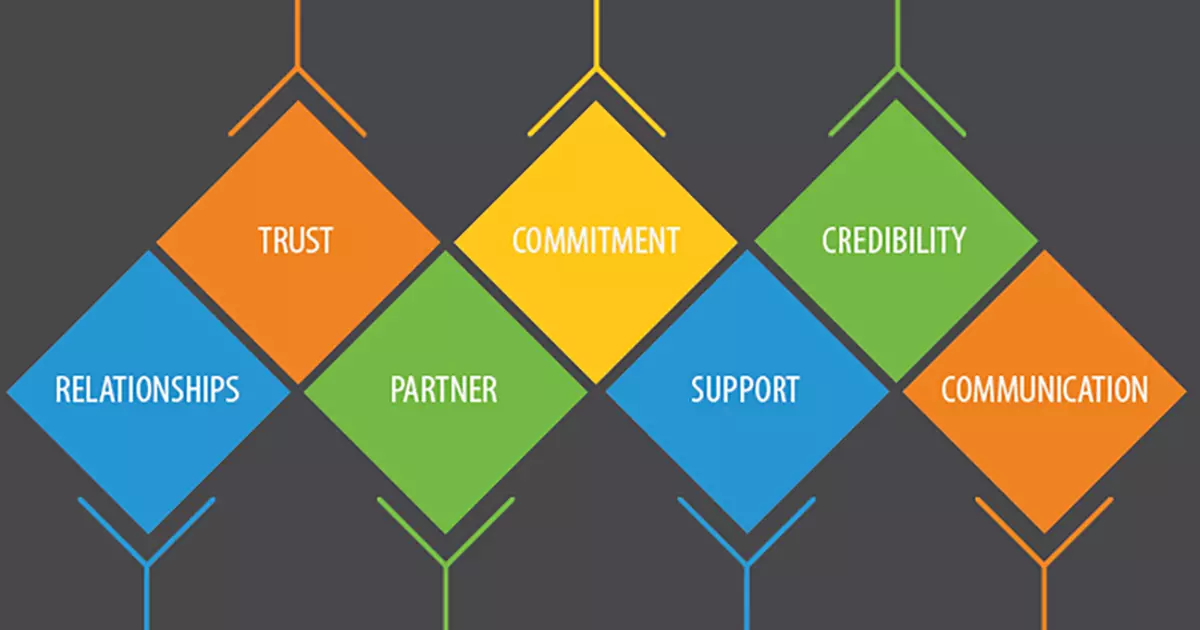
 When was the last time you saw a company advertise itself as “combative and adversarial?” Have you seen any vision statements that say “We struggle with our customers for common ground?” How about a tagline that says, “Committed to losing your trust?”
Of course not. But more than half of b-to-b technology companies are branding themselves this way by their actions, according to a new study by the Chief Marketing Officer Council, reported in a recent online article in B2B Magazine.
According to the study, which surveyed 1,000 b-to-b technology buyers, IT marketing and customer relationship executives and their channel partners, 56% of vendors perceive themselves as being customer-centric, but only 12% of customers agree. Even more telling is that more than half of customers surveyed described their relationship with ---More---
|
December 26, 2007 | 9:26am
The B-to-B buying process usually involves buying teams representing all areas of the company with a stake in the success of the purchased product, service or solution. However, many B-to-B web sites today are designed for one type of generic user without considering the differentiated needs of customers or different job functions within the same customer.
Many businesses struggle with the time investment needed just to post content, let alone tailor the experience to different needs. But since every web visitor is an individual, it is increasingly important to tailor the web site experience, whether by job function, stage of the buying process, or more.
Think about who buys – or specifies the buying of – your product or service. For some companies, it may be a fairly homogenous group. In others it may include C-level executives, design engineers designing the product into their product, manufacturing engineers using the product ---More---
|