Godfrey Logo
About Us  |  Contact Us  |  B2B Insights Sign-Up SEARCH
Top Right Corner Fade
B2B Insights Blog
B2B Insights Blog
Jim Everhart
Jim Everhart
Jim Everhart
Vice President and Creative Director
Jim's served as Copy Director, Creative Director, Director of Strategic Development, and now as Vice President and Creative Director. He has a passion for developing communications that are both stunning creatively and effective strategically.

July 30, 2008 | 9:41am
It’s generally true that the more keywords you put on your site, the better it does in organic search. But not always. 

In fact, many business-to-business sites suffer from keyword confusion to the point of keyword cannibalization.

When search engines spider your site, they are looking for more than just a jumble of words. They are looking for logic and consistency about how those words are used.

Say, for instance, that your main product, widgets, is used as a keyword throughout your site. That’s a good thing.

But what if the titles, descriptions, keywords and page content for several different pages all use widgets? And links, inside and outside your site, point to different pages? The simple answer is that the search engines get confused.

And the result is keyword cannibalization, with your pages actually competing against each other for search ranking.
---More---
June 30, 2008 | 11:04am
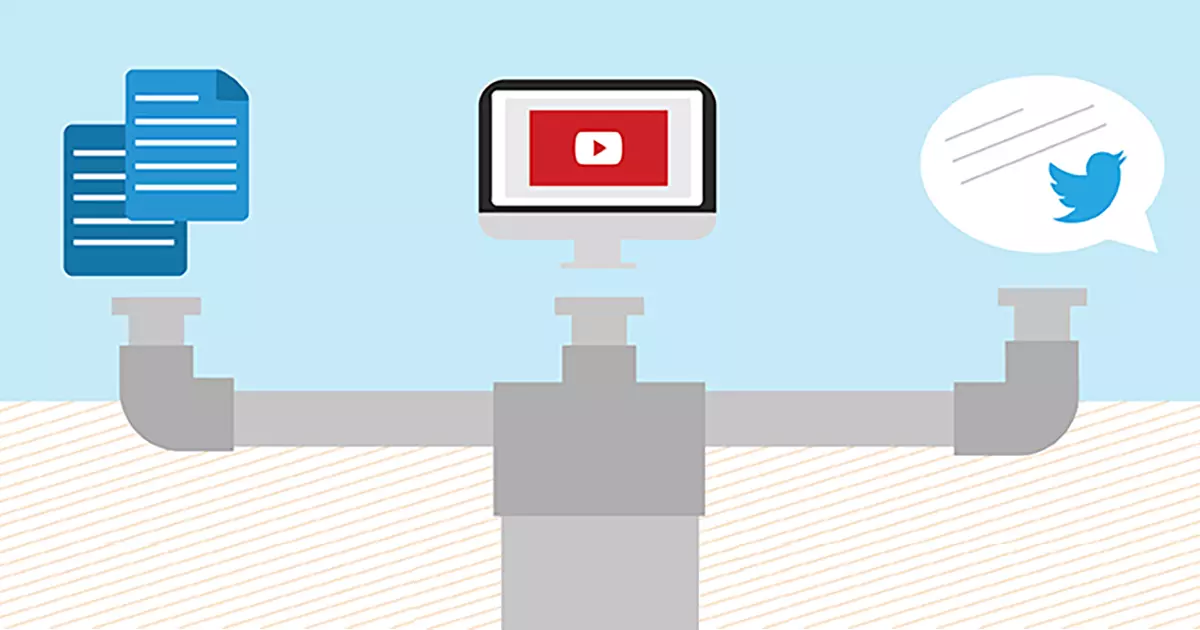
The revolution in how people use media has ignited the upheaval in marketing communications strategy we are calling hyperintegration. It begins with media, but doesn’t end there.

Time was, the job of media professionals was to make the best purchase among a limited number of advertising media. In the consumer world, that meant TV, magazines, newspapers, and radio. Maybe outdoor.


In business-to-business, the range was even tighter: which trade journals fit the best and were the most cost-effective?

The explosive growth not only in the number of options, but in their essential nature has changed the situation dramatically. A podcast offers informal, but personal, contact. A video shows rather than tells. A webcast demonstrates expertise. And it’s hard to beat search – paid or organic – for generating leads.

The point is, it’s not just about reach and frequency any more.
---More---
June 23, 2008 | 2:54pm
We recently had a discussion with a vendor who, in the process of extolling his web analytics product, said his company’s technology went beyond clicks and conversions. That ended up being troublesome for two reasons:

First, we’d be happy with reliable information on clicks and conversions, thank you. We’re not convinced we’re getting it from some of our existing resources. So we weren’t about to let a sales guy get away with changing the subject because he didn’t want to address our concerns.

And second, he offered a solution that was even worse. His company’s megabucks solution, engagement mapping, would track the activity of individual site visitors and try to give appropriate “credit” to other media, like online ads that a visitor may have seen, instead of just the last click.

That’s trying way too hard. It’s building a technology solution to a marketing question.
---More---
June 13, 2008 | 3:59pm
We’ve talked often about the role of branding in helping to improve marketing communications effectiveness and that certainly is its most obvious use, especially when you are trying to justify budgets to management and financial people.

Branding has a “softer” side, however. And that is branding’s role as self-revelation, as an opportunity to tell the world who you are.

For some, that can be a major event in a corporation’s life, giving you several equally-important opportunities:
  • To understand the past, what made customers trust you years ago, and how they think of you now.
  • To organize the present, to sort out what issues are temporary and transitory, and what factors have long-term consequences.
  • To shape the future, to decide what kind of company you will be in five, ten, or even 20 years.
To do that, of course, branding has to be much more than graphics, colors, and typefaces.
---More---
March 31, 2008 | 10:00am

To add one additional thought to Russ Green's recent post on getting on board with social media, one possible source of hesitation might be that marketers aren't sure how or why to apply the new media. Here are a few thoughts about the ways the social media apply to the B-to-B environment:

  • Networking: Many users find the new social media like blogs and social networking sites to be a great way to stay in touch with old coworkers or customers who move to another position. Losing a customer in one job may simply mean gaining a new customer, if you stay in touch. And beyond being able to wish people a happy birthday, social media may also assist your efforts to recruit top talent.
  • Content management: Many companies have purchased global content management systems at huge expense, and still have not achieved their goal of involving more of their
    ---More---
November 12, 2007 | 9:51am
Web 2.0 has presented us with a dazzling array of new communications tactics we can use to reach B-to-B audiences. It has also added an equally impressive assortment of measurement capabilities.

Where we once may have had a handful of print ads, direct mail pieces, brochures, and press releases in an integrated program, we might now have dozens of online ads, scores of Google Adwords, and an e-mail program to thousands of recipients, all segmented by interest.

And where we had 800 number phone calls and bounce-back cards returned, we now can count impressions, clicks, open rates, delivery rates, conversions, and search ratings.

It’s not an overstatement to say that we’re in danger of being overwhelmed by all the data. John Wanamaker’s desire to know “which half works” could seem even further away than ever.

But out of this concern comes a huge opportunity for marketing.
---More---
August 22, 2007 | 10:19am
Creative Analytics (Jim Everhart)

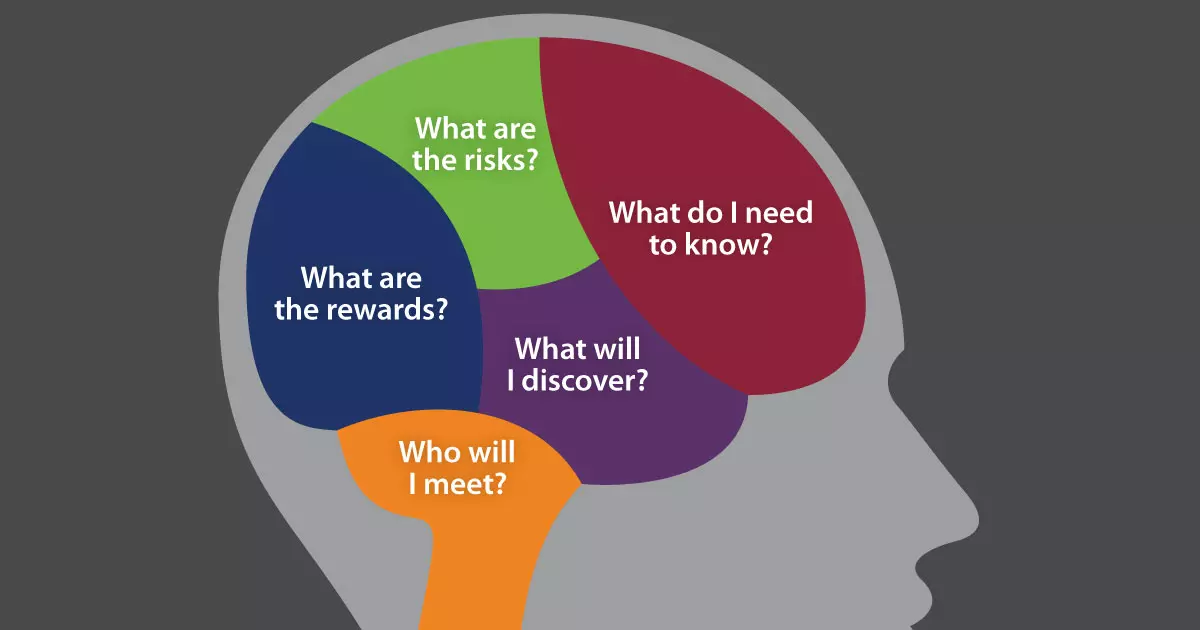
In the popular imagination, “creative” and “analytics” are the yin and yang of the advertising world: right-brained creatives avoiding left-brain analytics like the plague. Strictly speaking, it’s not an accurate stereotype. Creatives have never really been able to ignore the effectiveness of their work. However, there’s no question that many tried.

But it is a new world we live in. Because the new digital media bring with them a variety of measurement options, continuous measurement is possible. And because metrics – and, consequently, continuous improvement – are possible, they will soon be required. That’s also the world we live in.

And then there’s the constantly changing nature of our online interactions. What worked six months ago doesn’t work any longer. Remember when animated banners were hot. Then not. And now maybe . .
---More---

February 26, 2007 | 9:45am
I was speaking with one of my longtime colleagues recently about the heady days of the late '90s, when we were "changing the world" with that new-fangled thing we called the Internet. Much has happened since then, including the dot-com implosion, and now, the long-expected resurgence of web activity, especially in b-to-b.

But, we were remarking, it's different now.  The revolutionary fervor is gone, replaced, perhaps appropriately, with a more businesslike approach. There's no longer the veiled threat of  "companies that don't do e-commerce will be out of business in five years."

It's been replaced, however, by an almost dizzying array of options. Where there once was the Internet, or maybe, broadly, the new media, now there is a crazy-quilt landscape of options, all growing out of our ability to connect and communicate electronically.
---More---
July 17, 2006 | 5:13pm
A recent article in Advertising Age, “Storytelling: Escaping the Price War”  talks about the value of authentic narrative in branding.

The basic premise is that a company’s story can help it escape the price wars by elevating and differentiating the brand. The article cites Perrier’s story about its French physician and founder, who believed in the healing powers of the water that came from a mineral spring in southern France.

And it also talks about Nike’s inauspicious beginnings; how the company began with a waffle iron belonging to the wife of legendary Oregon running coach (and Nike co-founder) Bill Bowerman.

Some may argue that storytelling is not relevant to B2B. They might say that, as B2B marketers, we should forget about stories and focus on creative that promotes product benefits in an original way.

I must admit that I believe storytelling
---More---
July 6, 2006 | 9:57am

Blogging has the potential to bring about some significant changes in B2B marketing communications.

For good reason: people like to read these things. Perhaps as much as some of us like to write them.

Because they’re written by people, the best of them are infused with personality. And that’s what makes them so attractive: you can sometimes tell more about a company in a few lines of a blog than in an entire capabilities piece.

And, I’m sure that people will find all kinds of interesting ways to add value to these conversations over the coming years.

That, of course, is what makes them so interesting and compelling. They’re simply not part of the traditional marketing communications program. They don’t speak marketing-ese. And clearly, readers are eating this up.

But, if and when we become more comfortable with these types of communications, we may use traditional marcom techniques to promote
---More---
 
 
Corner Cut      
Bottom Corder Fade   Bottom Right Corner Fade
  RSS  |  Client Extranets  |  Site Map  |  Terms & Conditions  |  Home
© Godfrey     http://www.godfrey.com/404error.aspx